CASE STUDY • 5 MINUTE READ
ROLE
Founding Product Designer
TIMELINE
12 months; Sept 2024 - Sept 2025
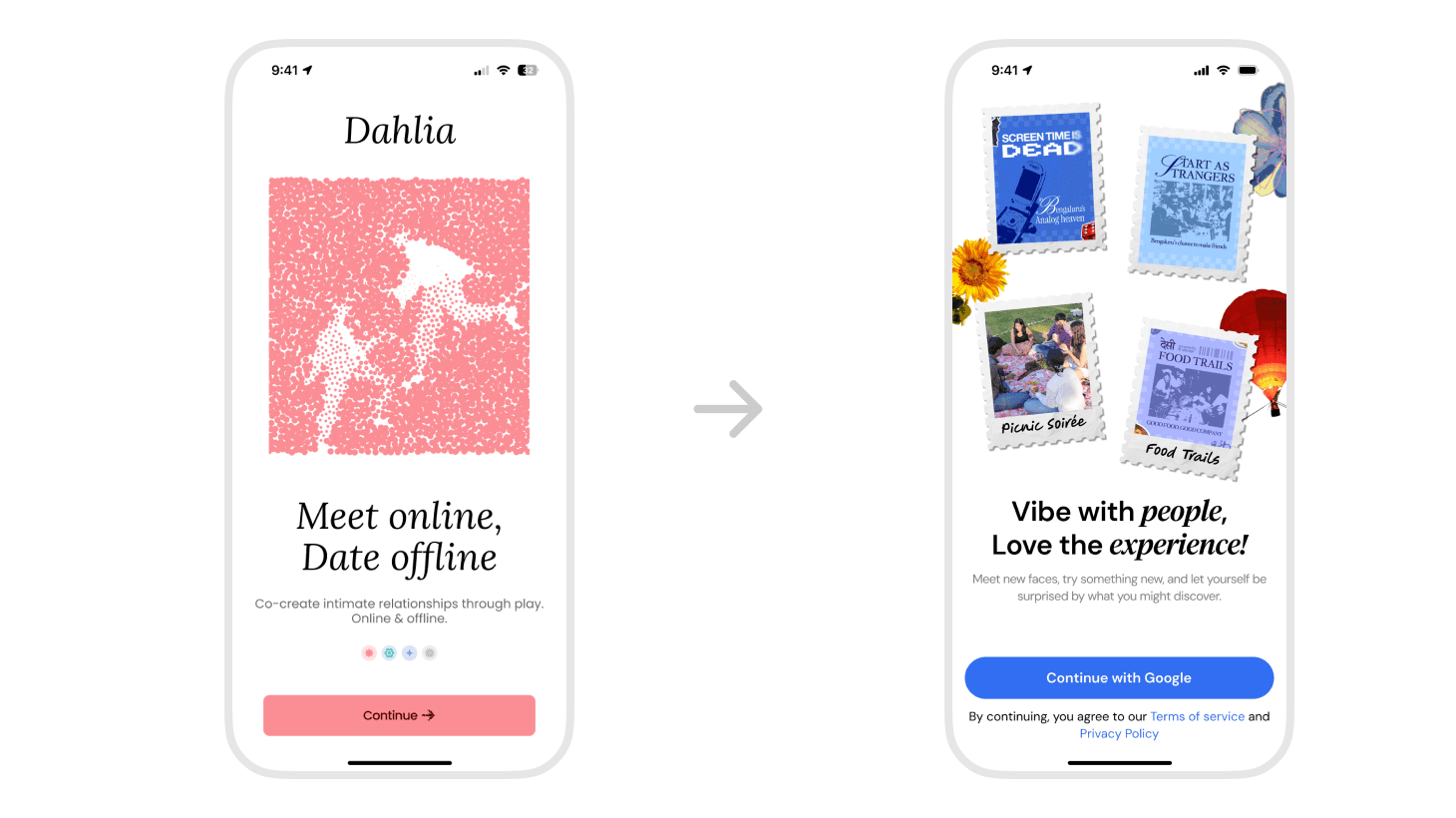
(Left) Onboarding screen before rebrand
(Right) Onboarding screen after rebrand
The product started as Dahlia, a dating app with a twist: match online, but meet offline at a curated venue. We curated venues, booked tables, and got two people to meet IRL.
But the business model struggled. After six months, we pivoted entirely - from exclusive 1:1 dates to open community experiences where strangers could connect through shared events.
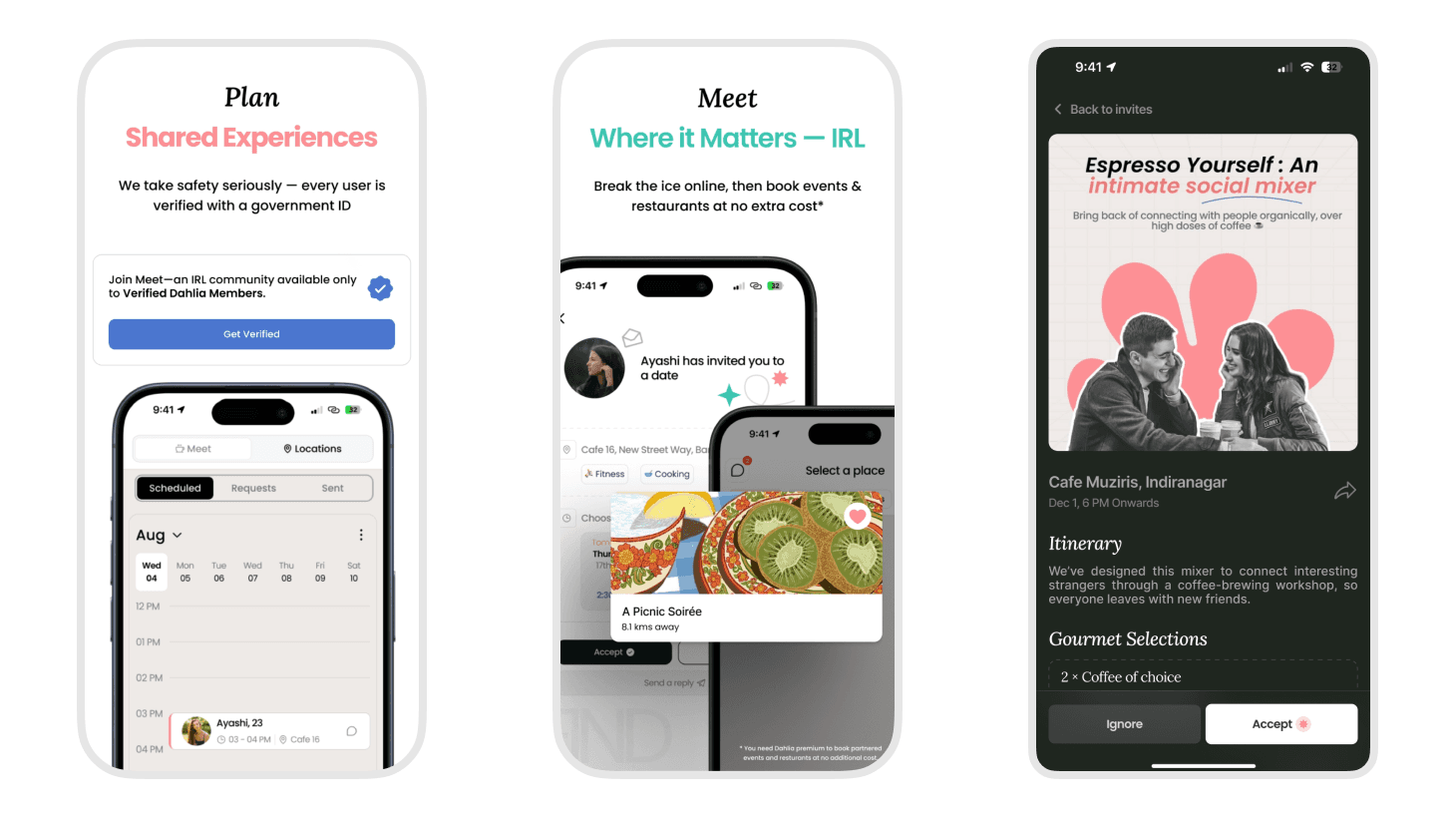
App store preview & in-app UI of Dahlia
We tested before pivoting. Ran community events such as Cubbon Park picnics, 'Start as Strangers' meetups, board game nights.
Audio-visual overview
Event showreels
Community events scaled better.
20+ ticket sales per event vs. 2 bookings per date.
Icon & store preview
App UI
This was not just a rebrand but a strategy pivot from a dating focused app to hyperlocal community events. We needed a new app icon, a new name, and of course - a new UI.
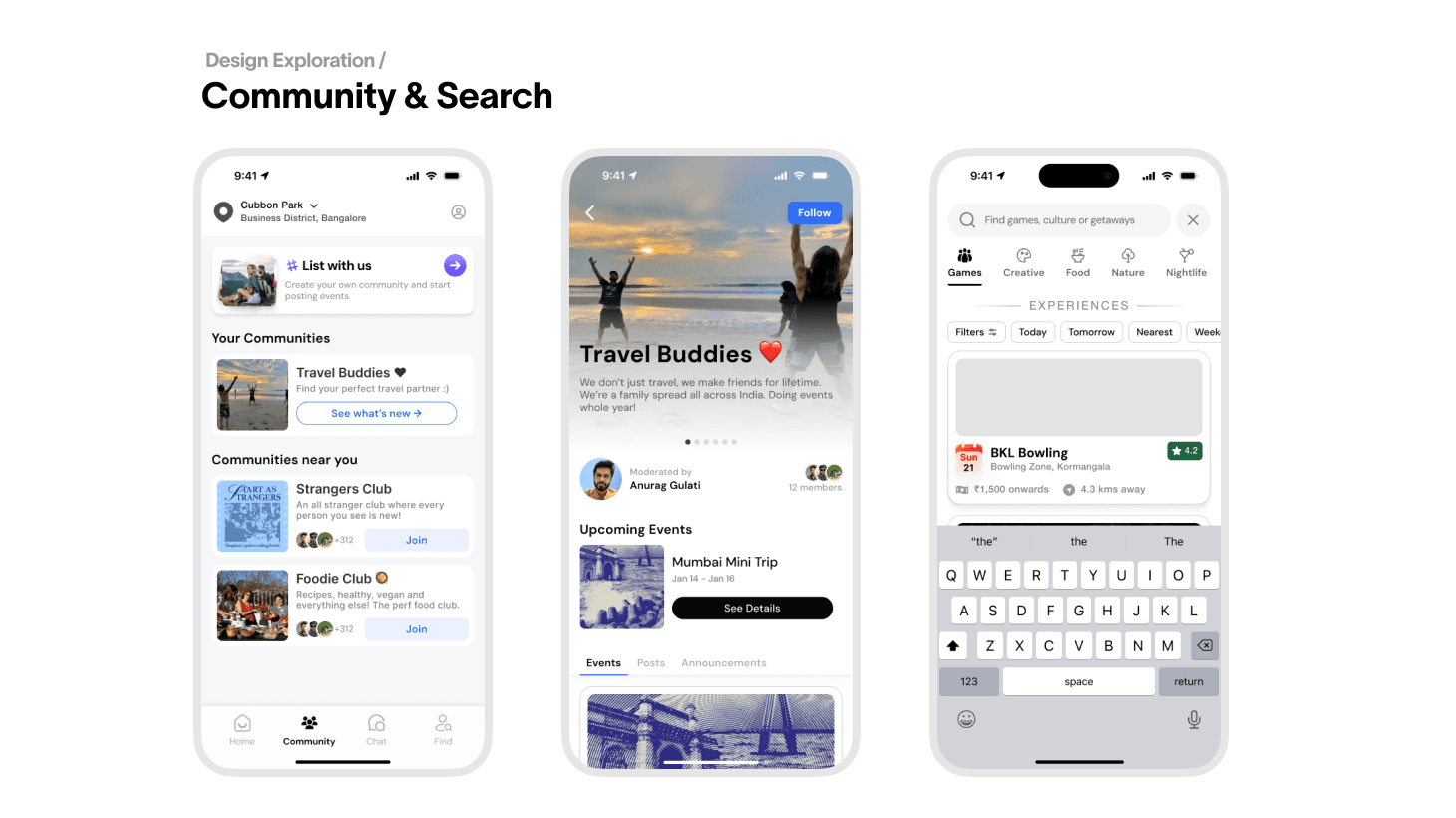
Exploratory Design
Early explorations for community features and search. We tested ways to surface local events, filter by interest, and help users find "their people" without overwhelming them with options. Not all of these shipped, but they informed the final discovery experience.
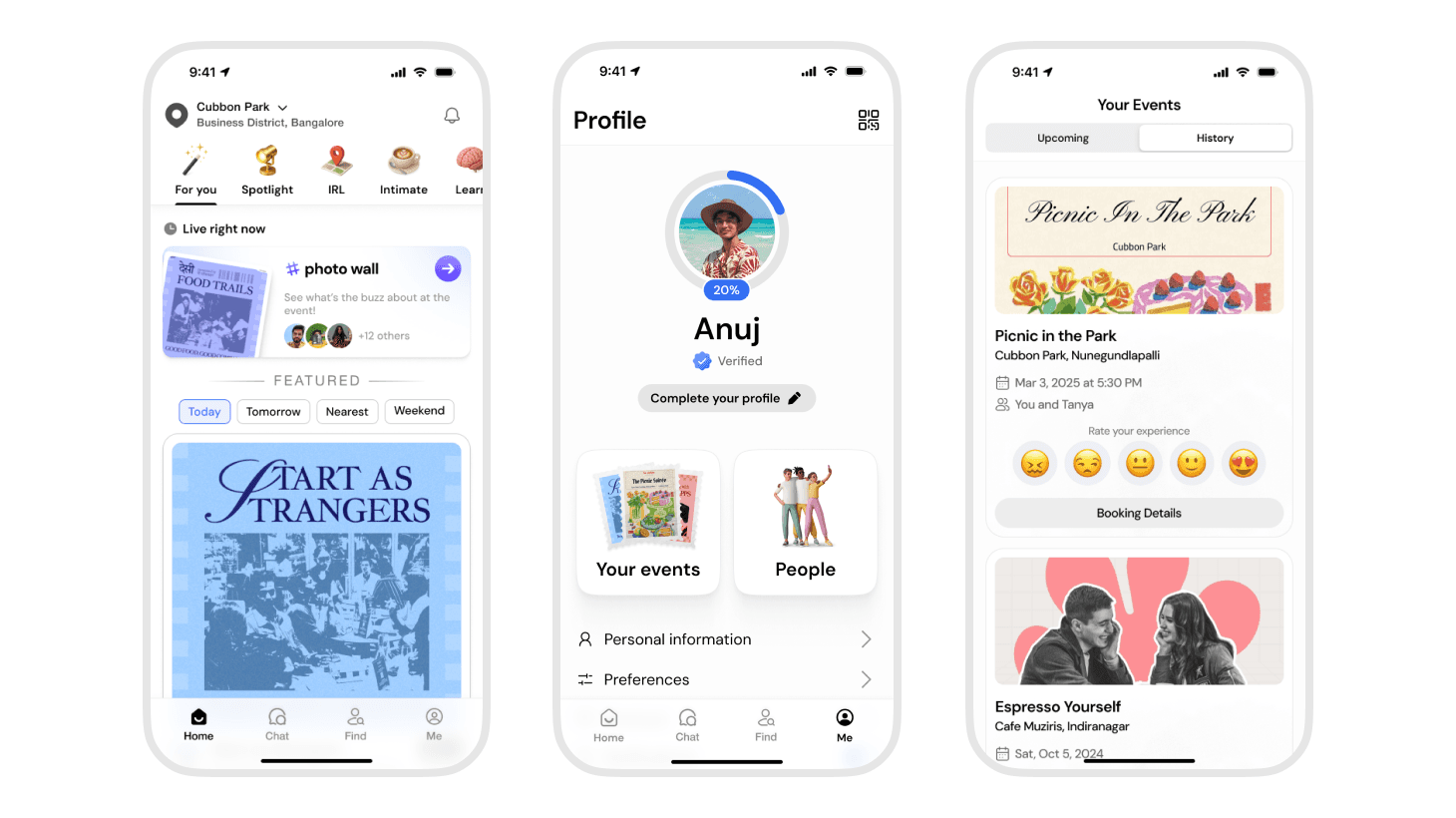
Final App
Be Offline reimagined how people discover and join events. Features like category filters (IRL, Intimate, Learn), time-based browsing, and group invites were all informed by what we learned hosting real events during the Dahlia era.
The company shut down in late 2025 after failing to secure funding. The product resonated with early users, but without marketing or distribution, we couldn't reach scale. Without scale, we couldn't test, learn, or iterate fast enough to find product-market fit.
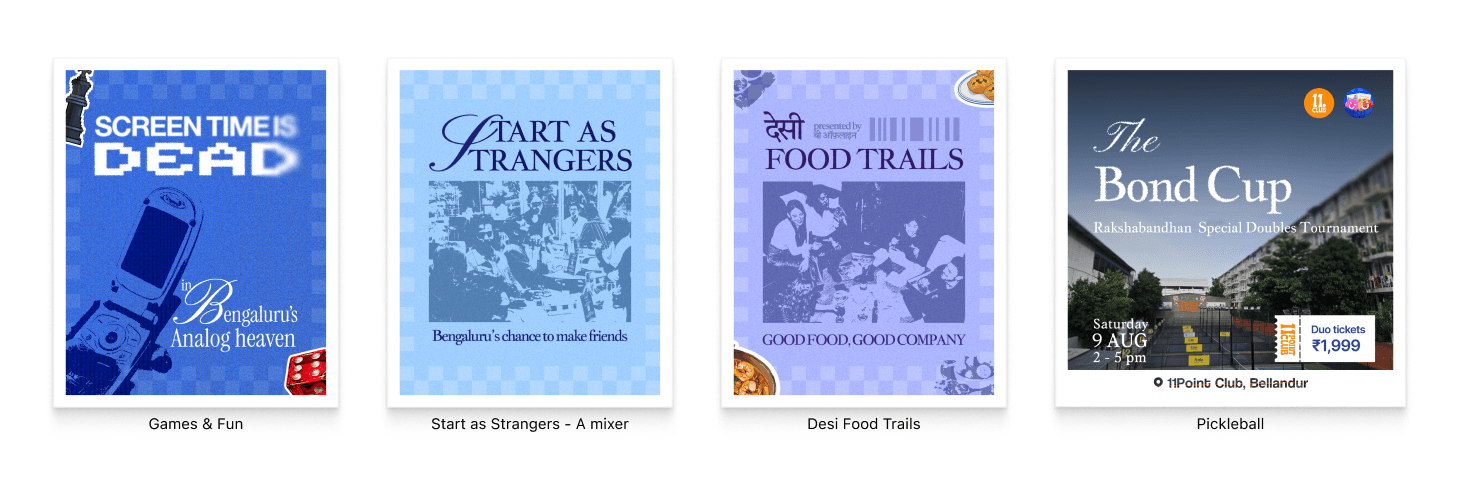
Event Posters
As the sole designer, I owned the full design scope: app UI, brand identity, pitch decks, event posters, social content, and physical signage at events.
Pitch deck preview
Product-market fit isn't binary. The product worked for early adopters but not for mass market.
Without scale, the best research is just trying the thing and watching what happens.
Design can't fix a distribution problem. We proved the concept but couldn't scale it.